How To Efficiently Learn the Most from What You Read
My Three-Step Book Note Method for Remembering & Writing About What I Read


I’ve painted myself into a reading corner with all of my projects and commitments. I host a podcast where I discuss books and journal articles with professors of philosophy and theology; I write science fiction and philosophy essays for my science fiction magazine; I started publishing a printed commonplace book of wise sayings in another magazine; I host read-alongs of philosophy books and philosophical fiction here on Substack where I write companion essays to help my audience get the most out of the readings; I’m under contract for a philosophy book and I’m working on a pitch for another; I lead several Bible studies; and I regularly preach at my church.
It’s all really great and rewarding stuff but having all these reading-heavy endeavors means I have to read relatively efficiently and I need to remember what I read enough to speak about it publicly, lead a discussion on it in a small group, or write an essay or chapter about it.
Thankfully, I’ve sort of backed into a really helpful three-part method for reading efficiently and for taking really good notes and I’m going to share it with my paid subscribers here below. This method has really helped me and I think it will help you as well, you may think it’s a lot of work and thus not as efficient as I’ve let on but putting more work in on the front end will help you remember and come back to the most important parts of the book later on, which will save you so much time in the long run.
So, if you like tutorials on the life of the mind, please do upgrade to a paid subscription and help support this and my other work. You’ll get access to the paid subscriber chat where I share exclusive updates and the Zoom links to out book club calls, access to all of my notebook philosophy posts which are early drafts of the chapters of my forthcoming book, Journal Like a Philosopher, access to exclusive courses and other philosophy content as well.
I’m going to give you step 1 but 2 and 3 are just for the paid subscribers since they help me feed my family. I include pictures from my own books and notebooks for steps 2&3 as well, for all the noteheads out there!
Step 1 - First Reading & Marginal Notes
So, like I said above, the method I use has 3 parts or steps.
Step one is to read the material through, all the way through, one time and to annotate the text with marginal notes while you do so.
If I have a rarer copy of the book and I don’t want to write in it, I’ll usually just buy a second copy that’s mass produced which I feel comfortable writing in. I know this doesn’t sound efficient, I’m buying multiple copies of the same book, but I’ve tried the reading without marginal notes thing and it’s really awful to try and go back to find a quotation or an argument and have no clue where to find it—it takes forever!
So buy a copy you can write in.
Alternatively, you may consider taking a picture of the page you want to annotate and then mark up the page digitally on your device. I’ve done this on occasion, it’s okay, still better than merely taking a picture or a screen shot and hoping I’ll be able to learn from the unmarked page later on. But if you’re reading a non-fiction piece that you really want to learn from, you’ll end up taking a picture of each page and then having to go back later and re-read the whole chapter or section or paper all over again as you make the annotations you wish you would have in the first reading.
So really, it’s easier to just have a book you can write in or to read the material on a tablet that allows you write on the text with a stylus and to make marginal notes and annotations right there in the text itself your first time through.
What kinds of things should you write in the margins? Well, the purpose of marginalia are to catch your eye and direct it to the most important words, phrases, arguments, etc., on the page—those things which are most important for YOU to remember and reflect back on.
I’m usually reading with an eye towards writing about what I’ve read. I also collect wise sayings—sententiae—from what I read so I will underline and highlight a wise saying in the text and write “sententiae” in the margins next to it so I can scan back through the book or paper and abstract out all the wise sayings for my commonplace books afterward.
I also underline or highlight (sometimes both) key arguments or positions of the author and then will summarize the points in the margins and draw an arrow from my note to the argument on the page. This saves me a ton of time when I’m going back through looking for that argument or point.
I also drop “??” in the margins where I just don’t understand when the author is saying or where I think I must be misinterpreting them. This allows me to think deeply about the passage but not get stuck. I can move on after trying to figure it out and failing by giving myself a “??” I owe you. This reminds me to come back and think more on that section.
Sometimes I just highlight and entire section of the book and label its contents in the margins, something like “On AI” with an arrow. Those sorts of notes are really simple but they will help you in your second reading immensely. They’re sort of like the upside-down exclamation point in Spanish ‘¿’, it signals to you before you start reading the sentence that it’s a question, if you’re reading out-loud, it signals you to start the questioning inflection earlier than we do in english—right at the very end up the sentence when we see the question mark. That’s how marginal notes help you on your second time reading through a text. You are helping yourself read the text better through the notes and annotations you’ve made in your first reading. So do it!
I write a bit more about marginal notes in this post here:

But you’re going to need to come up with your own marginal symbols and protocol for what to hight light, what to underline, what things need to be remembered, how to mark an argument or a wise saying, etc. You’ll also form different habits for non-fiction texts than you do for fiction. I make very few notes in my fiction books. I still mark out the sententiae. And if I’m writing companion pieces for you guys here on Substack, then I’ll take more marginal notes than I would have other wise, but they still don’t compare to the volume I take in a non-fiction text where I’m trying to follow an argument and note my initial thoughts.
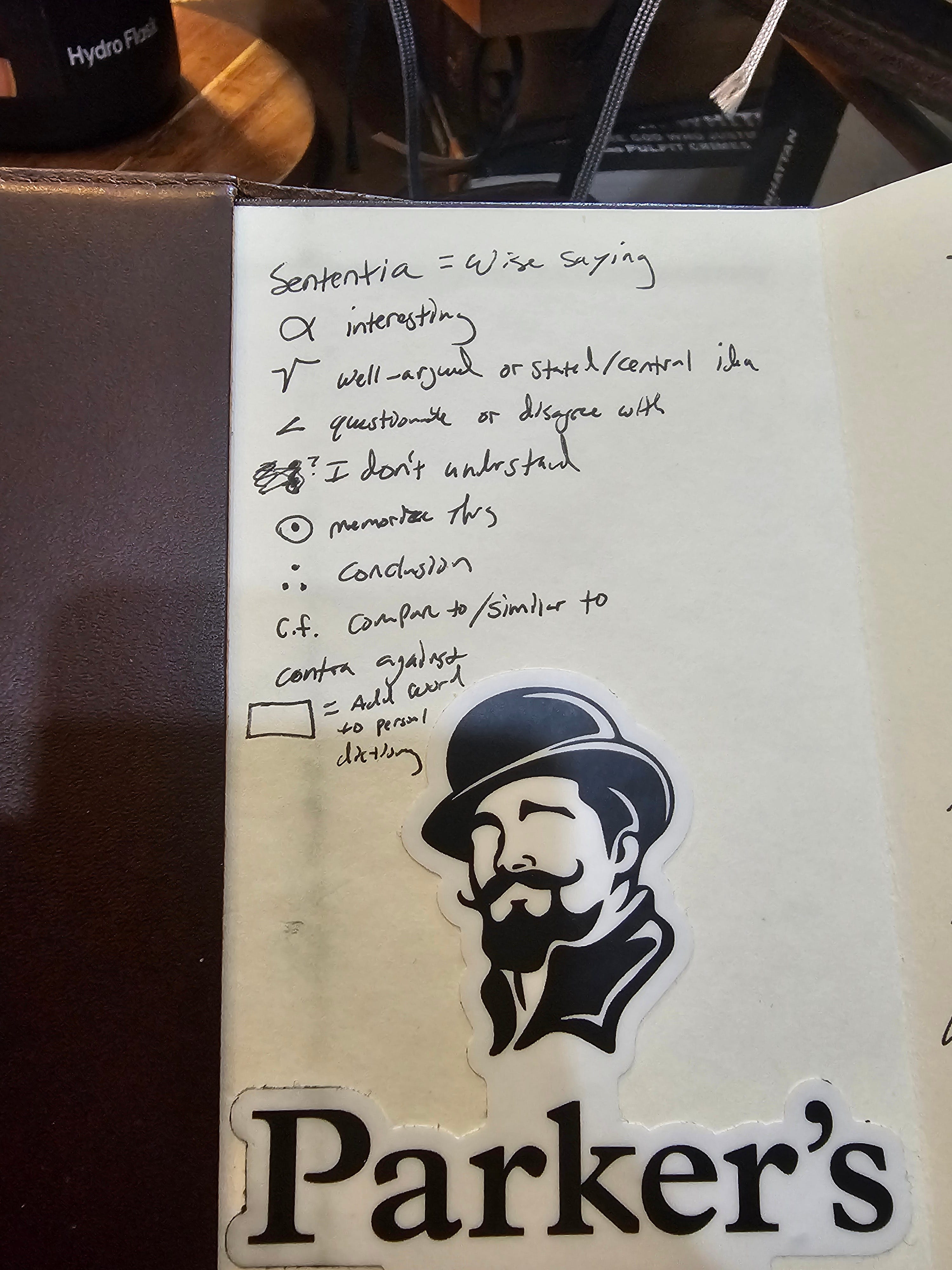
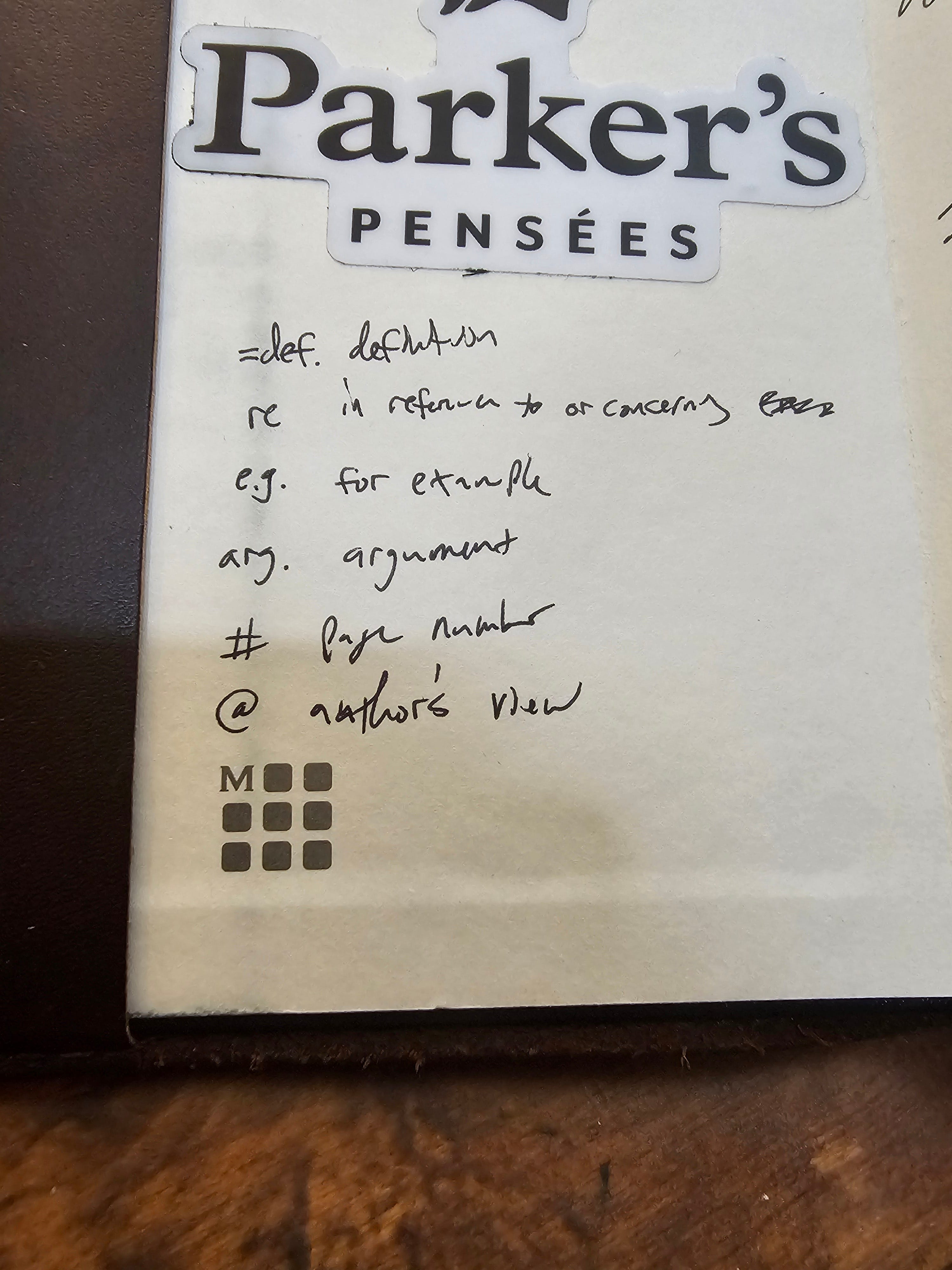
Here are the symbols I’ve been recommended, I like them for the most part but I don’t force myself to use them all in everything I read, I just use the ones that come most naturally to me and I adapt them when needed.