

Defense Against The Dark Arts: The Philosophy of Wizards
The Books I'd Use for Teaching A Course On The Philosophy of Wizards


I’m teaching a course on the philosophy and theology of C.S. Lewis this summer and it’s going really well. I’m teaching it through a startup called Profer which is, as far as I know, the first third-party, non-college institution to offer accredited classes. So, I have several students taking my course for credit and the rest auditing the course. So cool!
You can still join if you want to audit the course (not for credit), catch our past recorded classes, and join us for the last 4 weeks. Additionally, if you’re reading this after August 15th, 2026, you can still sign up and audit my class and watch all the recorded class sessions.
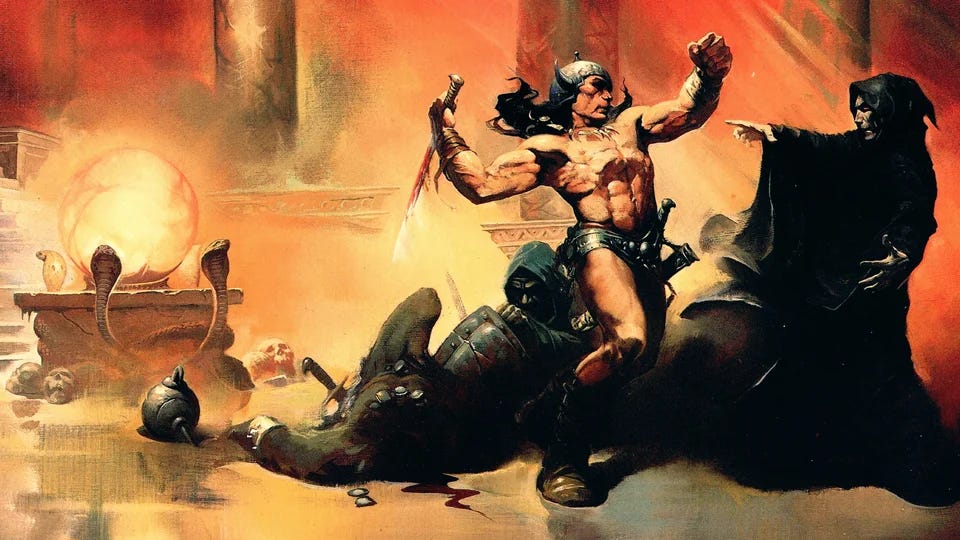
Wizards As a Subject of Study
But the success of this Profer class got me thinking about what I would teach next and if you are familiar with my latest hyper-fixation, you won’t be surprised that I want to teach a course on the philosophy of wizards.
Wizards fascinate me so much, not because I want to be one, but because the way a society thinks about its wizards is so instructive and fascinating. Wizards, sorcerers, ceremonial magicians, warlocks, magi, mages, adepts, and other miracle workers aren’t just the subject matter of fantasy novels, they have real historical antecedents and precedents—whether or not their magic was anything more than illusory.
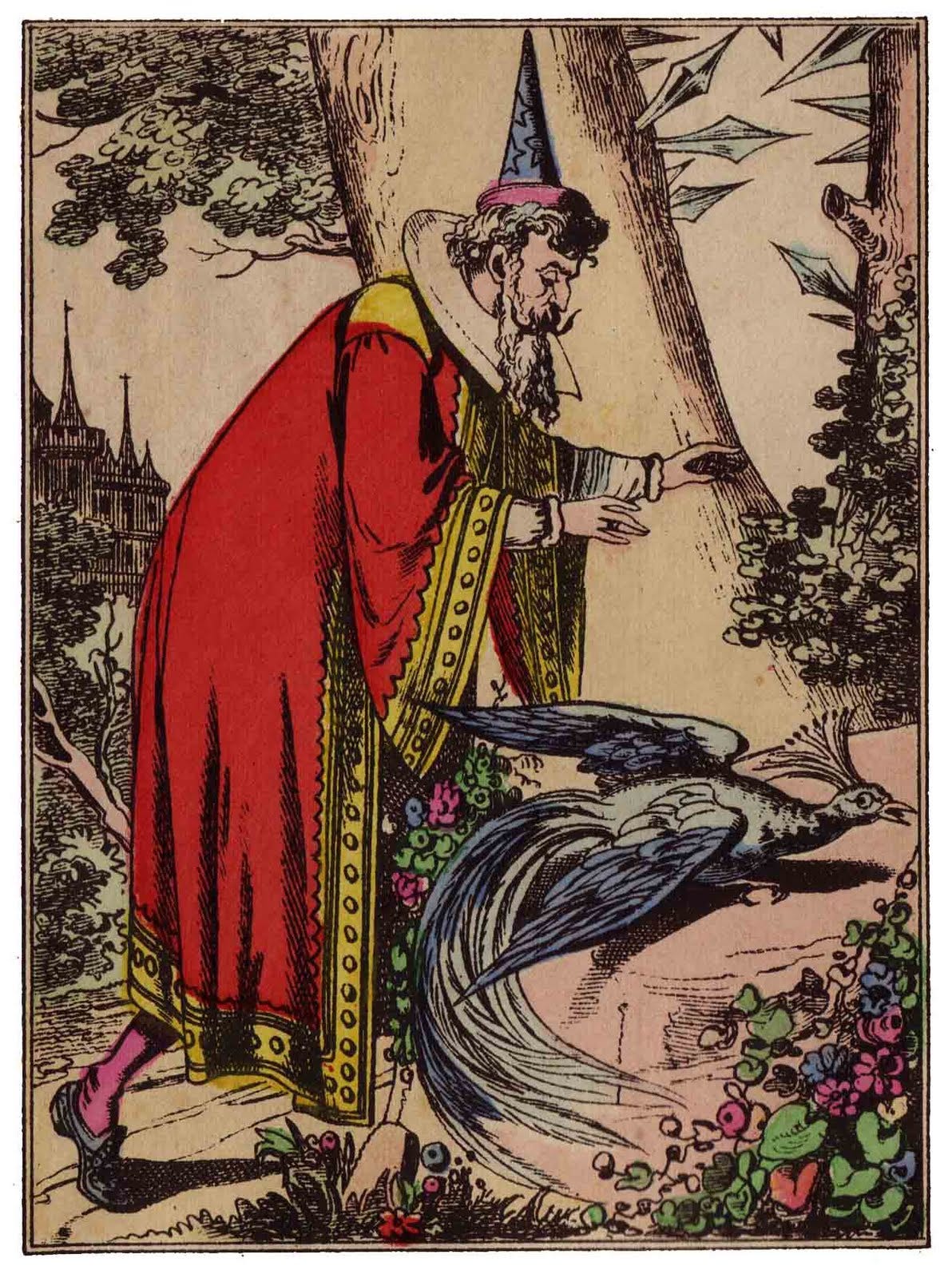
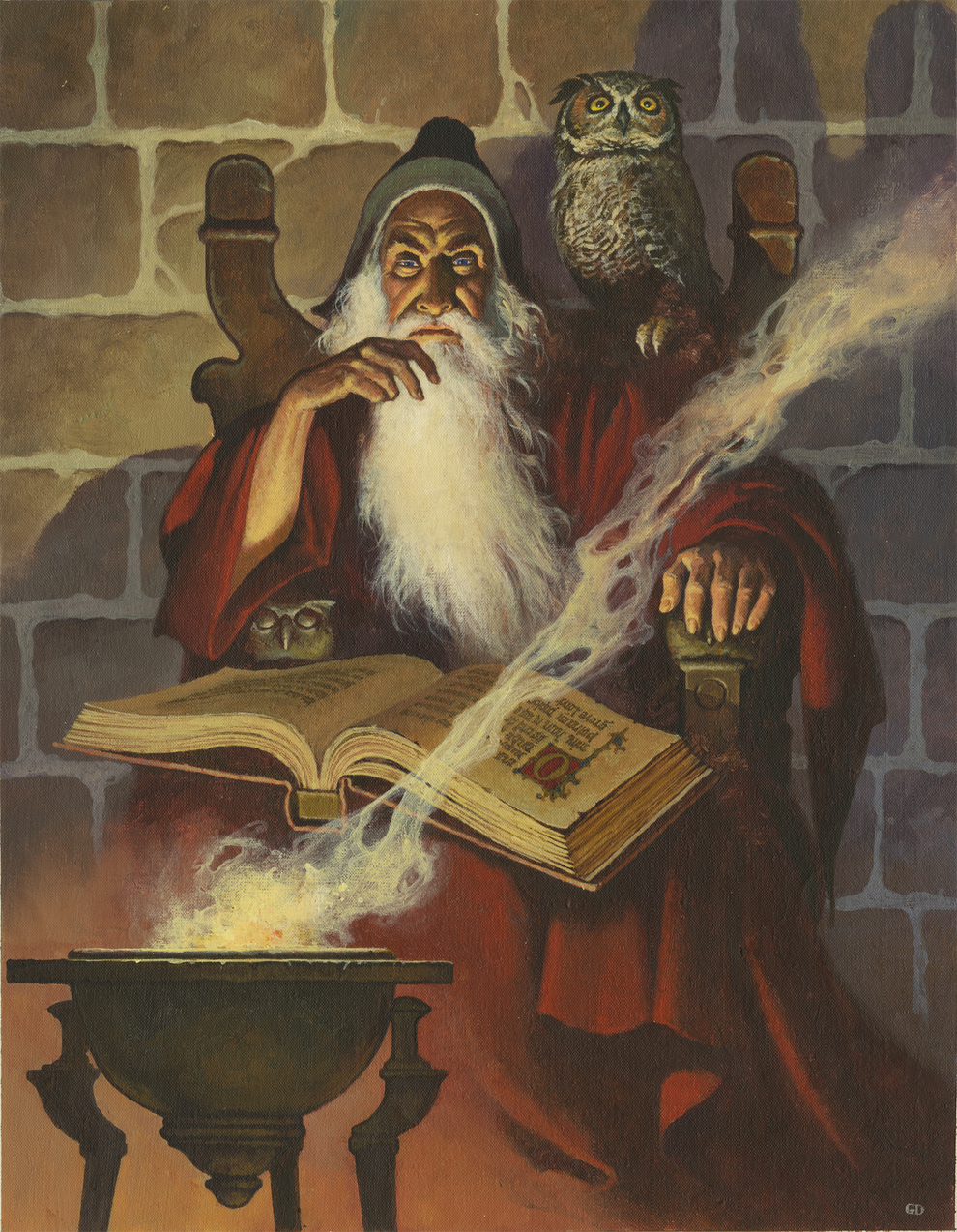
As a philosopher, a wisdom lover, I’m interested in our arrogant cousins, the wys-ards who are too wise for their own good. I’m interested in quaint cottage wizards and castle tower wizards over witches and shaman but a defense against the dark arts course should touch on all the theories of magic, be it natural magia magic or unnatural, even demonic goetia magic, spells and potions, crystal balls and amulets, and even bottled up djinn (I’m looking at you, Aladdin).
A course on the philosophy of wizards should delve into the wizards of history and fiction, because fictional depictions of wizards are instructive too, maybe even especially so.
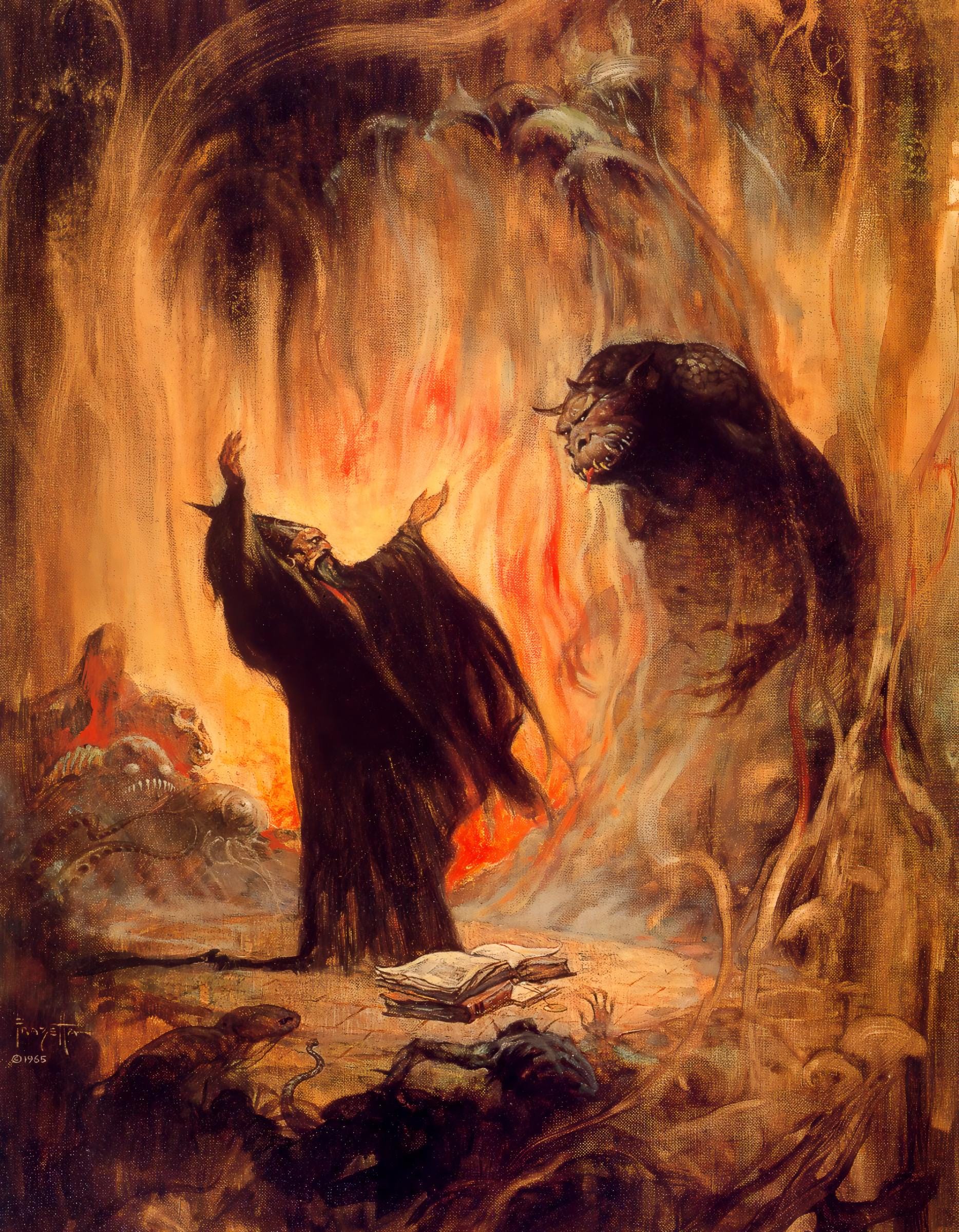
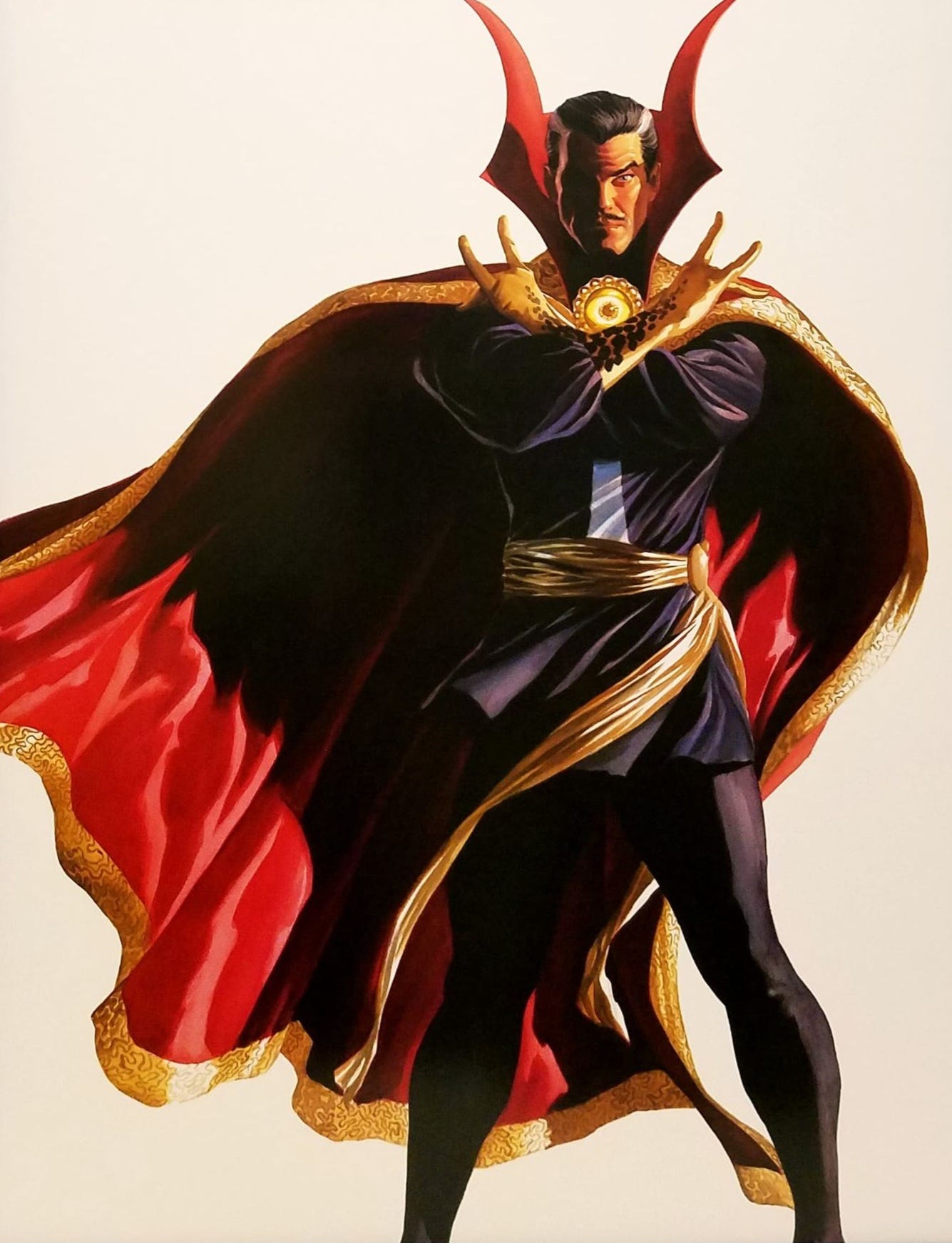
Historically, ceremonial magicians believed in God and angels and demons but instead of seeking God’s will, they would write His names, including the tetragrammaton, all over their robes for protection, then they’d seek to conjure a demon and compel it to help them. It’s such a pragmatic, mercenary, selfish mentality, not to mention that it’s utterly preposterous—how could you ever trust anything a demon ever says? But then we depict fictional characters like Doctor Strange, who is 100% a ceremonial magician, as a benevolent, selfless superhero who can call on black magic and even demons for good. Do you see how that actually says a lot about us, myself included since I love me some Doctor Strange?
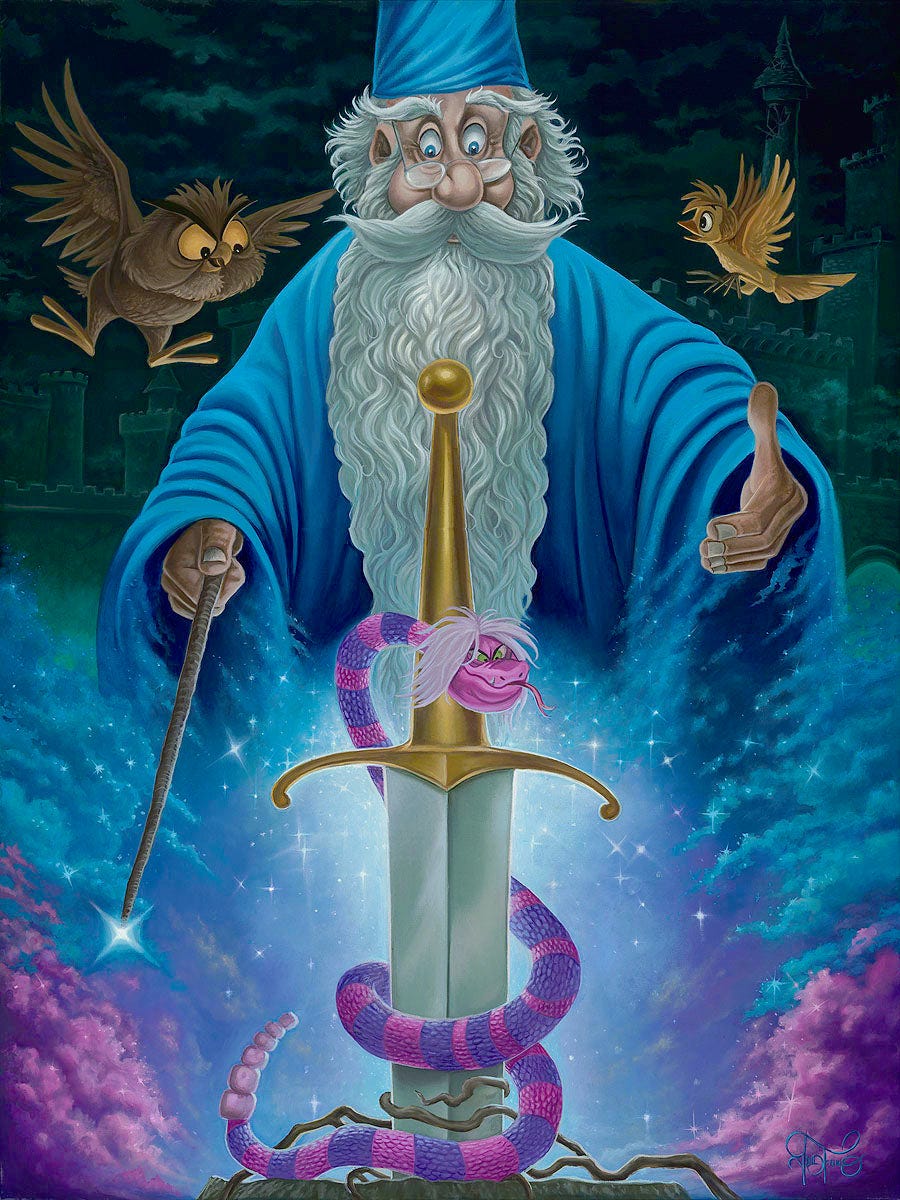
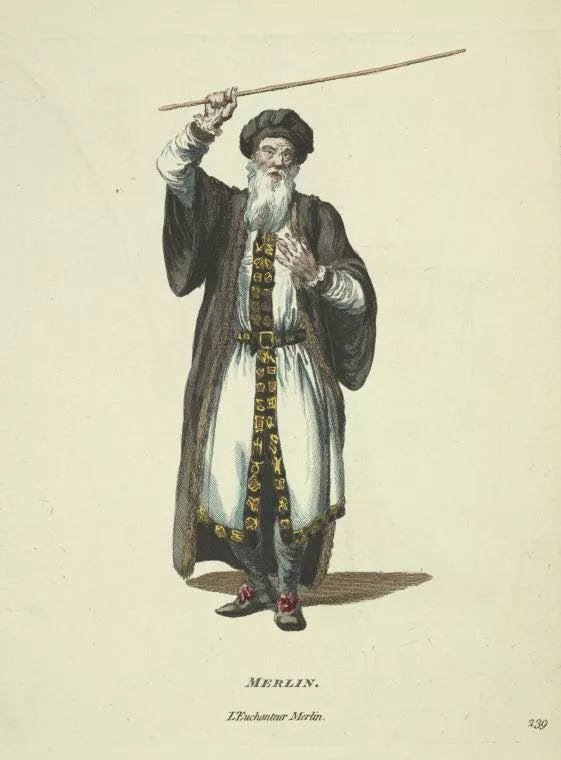
But there are other kinds of wizards and not all of them were said to call on demons—though many are still associated with them, like Merlin who is said to be a son of a demon. However, Philosophers like Pythagoras and Empedocles were depicted as more natural wizards who controlled storms and plagues and other aspects of nature through their own inherent powers. So, it’d be fascinating to consider those kinds as well.

It’d also be good to consider our modern forms of magic, which we call technology, and note the correlation between Martin Heidegger’s two ways of technology: bringing-forth and challenging-forth, and the two ways of magic: magia and goetia.
Then there’s Jesus. Many of Jesus’s jewish contemporaries claimed that he was simply a magician who led people astray through his own magical abilities which he perhaps learned from his time in Egypt—though others definitely attributed his miracles to demons (Beelzebub specicially). For my money, Jesus was actually a magician—and so were Aaron and Moses—but he wasn’t merely a magician. Neither was he merely a philosopher, though he was that as well. Jesus was a magician of God who, when acting according to his human nature, relied on the power of the Holy Spirit to perform his miracles.
Adding in the theological study of magic would be eminently instructive for the class. Why is sorcery bad? Because it’s trying to get God’s power without God. Necromancy is evil; Christ raising the dead is beautiful. Transmuting elements into potions for controlling others is vile; turning water into wine at a party is pretty chill. Using magical staffs to control battles is wrong if it’s not according to God’s will, but it’s pretty epic when God tells Moses to do it. Calling down plagues on your enemies is bad, unless God is doing it to bring them to repentance, salvation from false gods, and restoration with Himself.
I could go on, but you see my point. Magic and wizards are deeply ingrained in every society and how we think about them and depict them can help us understand our own social location as well. As a Christian philosopher, I want to be wise concerning good and simple concerning evil, but I also want to destroy arguments and every lofty opinion raised against the knowledge of God while knowing that we struggle not with flesh and blood but with all sorts of spiritual forces. So, with that in mind, I would never want to delve into magical spells and crap like that myself, nor would I promote that to my students. It’d be a defense against the dark arts course, ultimately aimed at promoting the virtues of the philosopher and repentance from that self-serving vicious wizard heart that all of our flesh wants us to embrace.
Books
So, here’s a list of the books that I’d teach from if I taught a course on the philosophy of magic and wizards, most are linked with my Amazon affiliate link if you want to grab a copy:
The Great Wizards of Antiquity: The Dawn of Western Magic and Alchemy by Guy Ogilvy
This author is really quirky, and I like it. He’s a self-professed alchemist and includes wild stories about his accidentally controlling the weather or like meeting Poseidon? But his scholarship is good and his sources are vast. This book opened my eyes to the idea of the ancient philosopher-wizard.
Wizards: A History by P.G. Maxwell-Stuart
This book covers historical accounts of ceremonial magicians and recounts the dangers associated with trying to conjure angels and demons. It was very illuminating for me and completely changed how I view wizards and magicians.
The Book of Magic: From Antiquity to the Enlightenment edited by Brian Copenhaver
This is something of a compendium/anthology of magical texts, objects, sentiments, and descriptions of various kinds of magics and how they were received in their time and place.
Magus: The Art of Magic from Faustus to Agrippa by Anthony Grafton
Grafton argues that ‘magus’ was a distinct kind of intellectual in the Renaissance alongside of other intellectuals like arts, engineers, philosophers, Christian humanists, and religious reformers.
The Two Towers by J.R.R. Tolkien
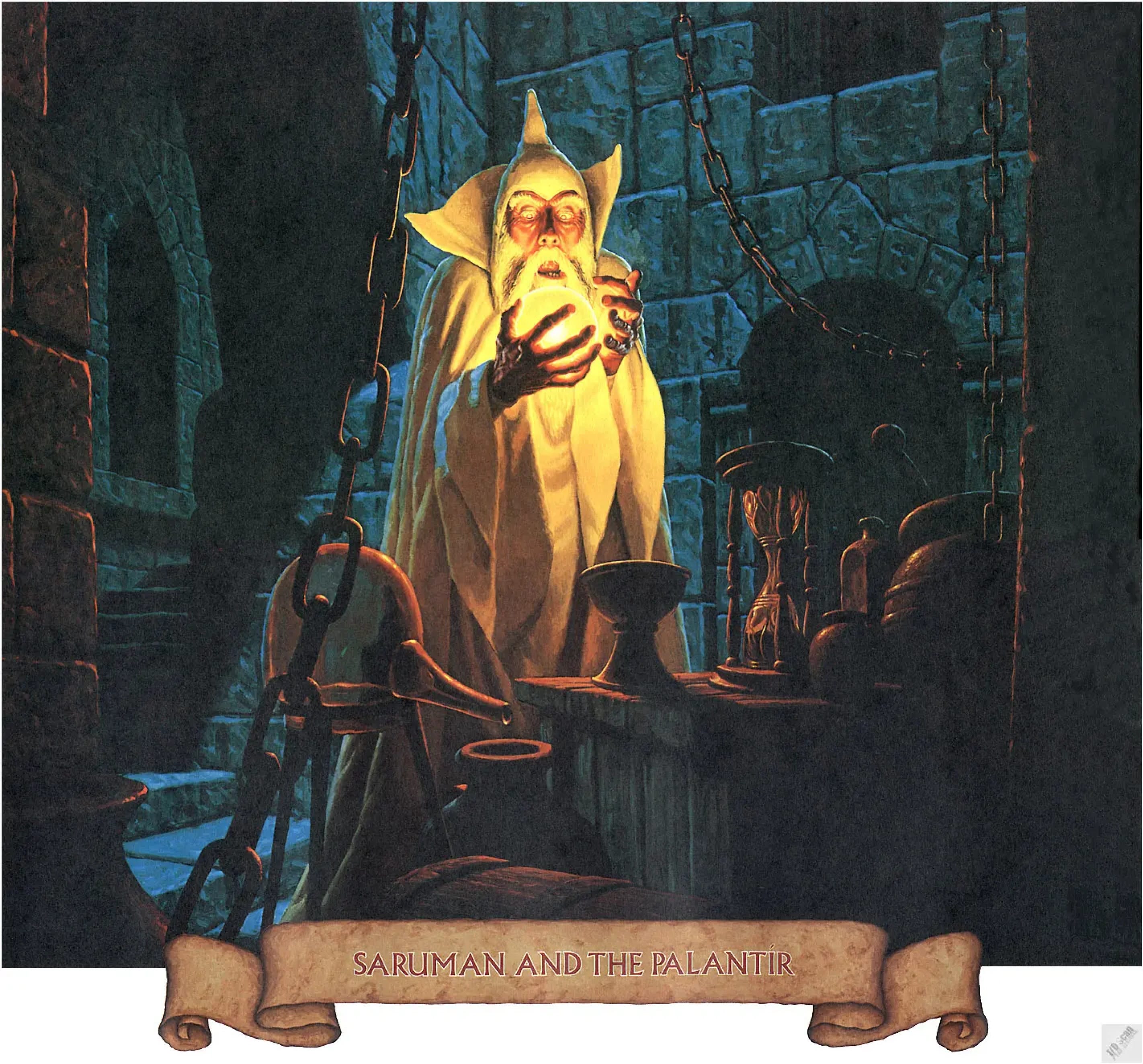
This book, the middle third of the Lord of The Rings, is becoming my favorite of the trilogy because of the juxtaposition between Gandalf and Saruman (his shadow self?)—not to mention the epic battle between Gandalf and the Balrog (the collective unconscious?). Gandalf is today’s Merlin and he’s a mix between Merlin, Jesus, and Odin. What we say about Gandalf says a lot about us.
Ancient Philosophy, Mystery, and Magic: Empedocles and Pythagorean Tradition by Peter Kingsley
A very academic book, but Kingsley is a wonderful scholar who isn’t afraid to talk about Pythagoras and Empedocles as magi. It’s history of philosophy meets history of wizards and great.
That Hideous Strength by C.S. Lewis
Lewis’s view of magia vs. goetia magic in this book was life changing for me. The fact that he has his British Nazi analogs search for occult knowledge in the form of Merlin and has them mix science with speaking to demons is just so prescient. Perhaps Lewis had a crystal ball of his own.
Wizards edited by Isaac Asimov
You can find this book cheaper on Ebay and if you do, buy it! It’s a collection of some of the very best wizard stories of all time. The stories are brilliant and the earliest ones represent wizards as they truly are—selfish adepts who’ve delved too deep.
Doctor Strange and Philosophy: The Other Book of Forbidden Knowledge edited by Mark D. White
I don’t always love these pop-culture and philosophy books but the subject matter is too good to resist: Doctor Strange! The Sorcerer Supreme is the ultimate wizard propaganda. It’s like what a wizard would write of himself: benevolent hero who pursues of truth and goodness, successfully battles and thwarts monsters and threats that the common man couldn’t even fathom, and selflessly calls on dangerous occult powers for the good of us all. Excuse my crassness, but Doctor Strange is a wizard’s wet-dream. This book looks at philosophical concepts present in the comics and movies and will be a helpful guide through his corpus.
Magic in the Middle Ages 3rd ed. by Richard Kieckhefer
This book studies the development of magic in the middle ages and compares and contrasts its relationship to other subjects like philosophy, politics, art, literature, religion, etc.
Let me know if there are books that I didn’t include but really should. No, I’m not including Harry Potter. I’ve seen the movies but never read the books and I don’t think I like the depiction of wizards in it. I’m open to the universe I guess, but there’s a lot of other stuff out there as you can see above.
Hey, if you like my work, please consider upgrading to a paid subscription and help me continue doing it.
Additionally, you can buy me a coffee to help fuel my next post:
I want to share more pictures but I better stop.
I immediately knew Asimov's anthology would be on the list when you started talking about "too wise" wizards. For those who don't know, this 1983 anthology starts with an Introduction by Asimov himself. The opening words: "There is nothing really mysterious about the word “ wizard.”
The first syllable “ wiz” is used, in common slang these days, for anyone or anything that is uncommonly smart or impressive, and it sounds very much like “ wise.” In fact, it is a form of
“ wise,” and a “ wizard” is simply a “ wise man.” Of course there’s the suffix “ -ard,” which, along with its variant “ -art,” is usually used to indicate an excessive amount of something. A “ coward” is one who is too easily cowed; a “ braggart” is one who brags entirely too much; a “drunkard” is
one who is too frequently drunk.
And a “ wizard,” then? Presumably, a wizard is one who is too wise for anyone’s comfort.
How is that possible? In general, we tend to honor wisdom, to deify it almost. How can one be too wise?"
And every one of the ten short stories in that book is a straight banger. Harry Potter does not compare.
Thank you for what looks like an awesome book list! I may have to explore this one my own.
I have read Harry Potter many (many) times; it doesn’t belong on your list. But, you might enjoy John Granger’s *Looking for God in Harry Potter* - and even a couple of his follow-up books on the series. He does an excellent job of explaining the back story of Rowling’s works, plus the genres and texts she draws on. He discusses the wizardry in the books in a way you might find interesting.
Btw - read the Harry Potter series sometime. The books are so much MORE than the movies. There is so much depth to the stories that you would probably enjoy very much!