

The Most Important Philosophical Question to Ask Yourself

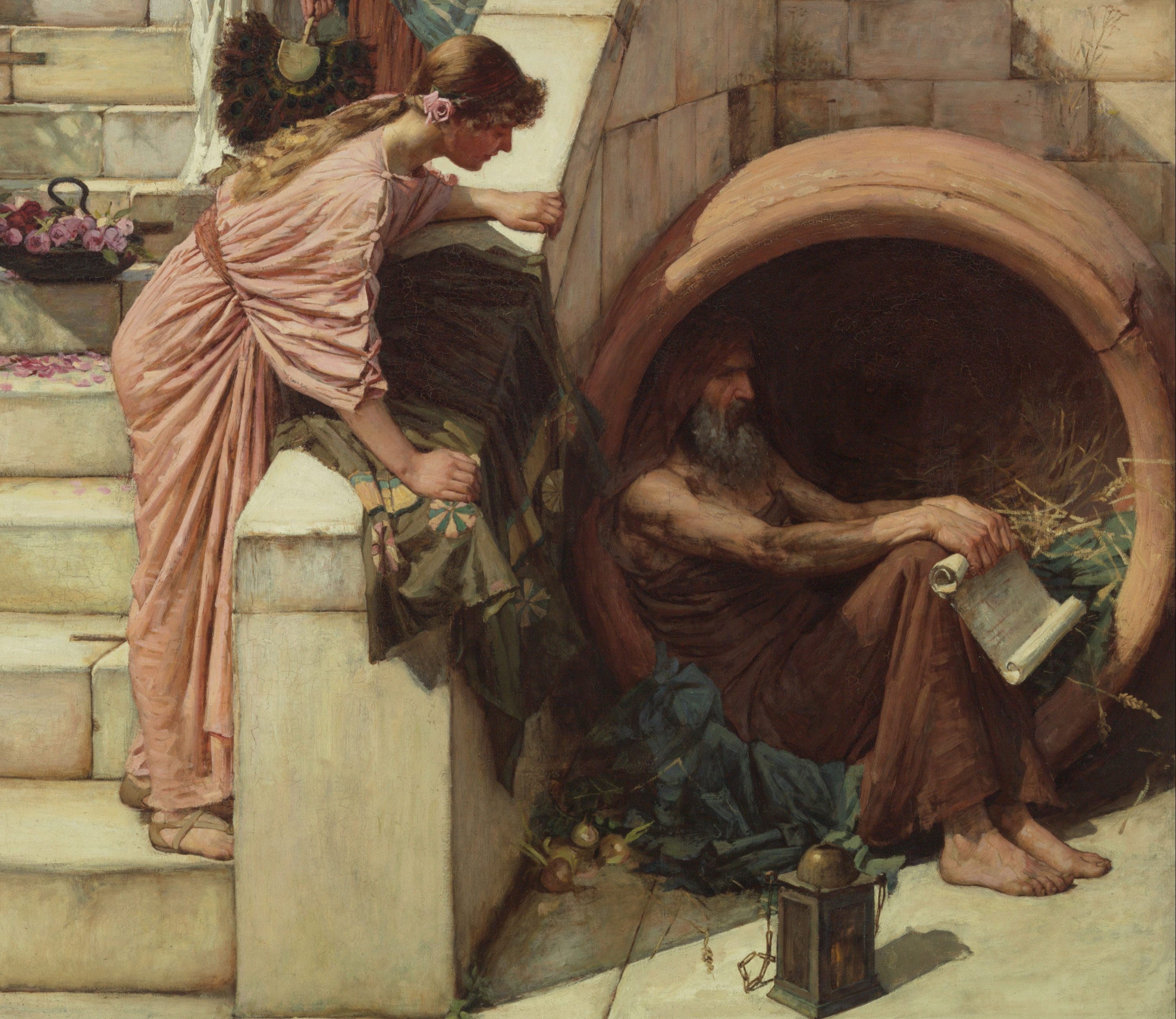
We recently read through Boethius’s The Consolation of Philosophy together here on my Parker’s Ponderings Substack and this time around one question popped out and won’t leave me alone: what’s it going to take to actually make you happy?
I don’t think this exact question was raised in the extended soliloquy (or divine dialogue or whatever you’d like to call the book), but it’s the thrust the probing questions that Lady Philosophy puts to Boethius in order to diagnosis his psychological ailment.
What is it going to take to actually make you happy?
Boethius was a political prisoner facing a death sentence when he wrote The Consolation, which is a conversation with himself, or his own reason, personified as a spiritual being we all call Lady Philosophy. She is meant to be the spirit of philosophy come down to console him in his time of trouble. She finds Boethius in a miserable state and uses philosophical arguments to cut away the false ideas and presuppositions which are leading to his misery.
Throughout the book, the nature of happiness—true, deep, fulfilling happiness—and its potential sources are debated. For whatever reason, something about this last read through was different. It was more personal. Lady Philosophy reached through the pages and interrogated me too. I couldn’t help but ask myself, am I looking for happiness in things that can’t actually give it to me? What would it look like for me to be truly happy, to feel fulfilled, whole, thriving and at peace? What would it take for me to feel like I’m on the right path and to have cognitive rest? What is happiness and what is it going to take for me to actually be happy?
I think I’ve thought about this question before but I can’t remember the last time I honestly sat down and pondered it. It’s pretty frightening actually. What if I come back with an impossible answer? Or banal answer? What if I come back with a monstrous, dastardly answer?
What’s it going to take to actually make me happy?
I get that this may sound like a trite question to ask yourself, or even an exceedingly selfish one. “Who cares? Stop being so navel-gazey and just think of others, serve others. That’s where you’ll find happiness.” Is that true? What about serving others will make me happy? Their recognition or gratitude? The outcome itself? A warm feeling from being selfless? Even if it is one of those things, I should still probably think about why that thing will make me happy. How long will that happiness last? Is it more of a posture thing? Take the posture or disposition yourself to be someone who serves and that will make you happy? Then do I ever actually have to serve? Couldn’t I take that posture and then strand myself on an island and enjoy happiness without having to serve anyone? What is happiness and where can it be found?
Lady Philosophy runs through a few potential sources of happiness and argues that each one is insufficient for bringing about the true thing.
Money can’t give you happiness, for money is an instrumental good at best—it is good for other things. Being miserly makes you hated and being hated won’t make you happy. Being generous wins you favor and popularity, but then it only wins you a good reputation when you’re getting rid of it—it’s when you cease to possess it that you enjoy its benefits. Indeed, money may not even be a ‘good’ thing at all since no good thing harms its owner, and we often see wealth harming its owners turning them into greedy megalomaniacs, or robbers and thieves, or paranoid misers.
Possessions can’t give you happiness because they increase your worry. The more precious possessions you have the more help you’ll need to protect them—and then you’ll have to worry about that help ripping you off as well. You’ll need help to watch your helpers. And the more you have, the more you end up wanting, ironically.
What about Power and earning dignities from power? Can they give me happiness? Nope. Power also comes and goes with the turning of the wheel of Fortune—as was the case with Boethius, who was basically second in command under King Theoderic and and then had to write of the Consolation under house arrest while awaiting his (wrongful) executing as a traitor. Power will not bring you happiness. It doesn’t last and you’ll spend all your time trying to get more or protecting what you’ve already gains—or both! And anything you can do to others with power can be done to you with power as well.
And external power is no use in ruling over yourself, either. You may rule the world but if you can’t rule your own emotions and thoughts, then what good is that power? Just as “riches are unable to quench insatiable greed” so “power does not make a man master of himself if he is imprisoned by the indissoluble chains of wicked lusts; and when high office is bestowed on unworthy men, so far from making them worthy, it only betrays them and reveals their unworthiness.” (Consolation, Penguin Classics, pg 39).
So power does not aid you in mastering yourself, but neither does it help you master others. “You cannot impose anything on a free mind, and you cannot move from its state of inner tranquillity a mind at peace with itself and firmly founded on reason.” (38). Lady Philosophy gives the example of a tyrant king who sought to torture a philosopher to force him to betray his fellow conspirators but instead of talking, the philosopher bit off his own tongue! The tyrant “had thought the tortures an occasion for barbarity, but [the philosopher] made them an opportunity for heroism.” (38).
Power and the status it gives is transient and can’t provide happiness.
Maybe fame can do it? A lasting legacy? Can’t I achieve immortality, significance, and happiness through fame? No. Popular favor is empty and can easily be taken. And if it’s not taken here during your life on earth, then it will be taken when you die, “Many men have been famous in their time but their memory has perished because there were no historians to write about them.” (42). And even if someone does write about you, that account too can be lost!
But when you die, either your consciousness is annihilated or it continues on in your immaterial mind. If annihilated, who cares if your fame is remembered? You’re literally gone. If you will survive the death of your body do you think you will care about your earthly fame then? No chance. When the conscious mind, mens conscia, “is freed from the earthly prison and seeks out heaven in freedom, surely it will despise every earthly affair. In the experience of heaven it will rejoice in its delivery from earthly things.” (43).
No, fame is no source of happiness either.
Pleasure? Will that make you happy? Lady Philosophy argues that the pursuit of pleasure is full of anxiety and its fulfillment is full of remorse (pg. 59) and I tend to agree with her. Anyone who’s sought happiness by pressing that pleasure button knows that it can’t bring you the happiness we long for.
But again, these are just Boethius’s contentions—as argued through the mouth of his Lady Philosophy. He concludes that neither money, nor possessions, nor power, nor fame, nor legacy, no pleasure can give you deep, abiding happiness—that eudaimonia happiness that Aristotle and the other Greek philosophers talked about, nor that markarios blessed happiness that the philosopher Jesus Christ talked about in his sermon on the mount.
So what will? What will it take to actually make you happy?
I think that’s probably one of the deepest questions you can ask yourself and I don’t know that too many of us give ourselves the time and space to try and answer it honestly.
Maybe you do think that having the right amount of money will actually make you happy. I sort of think that reaching 1k paid subscribers here will make me happy, if I’m being honest. I’d get a sweet little solid orange check next to my name, I’ll be able to write more freely and not have to worry about providing for my family or these stupid back taxes that are hanging over my head. Basically, I think having more paid Substack subscribers will make me happy, but at the same time I know that’s not true. Every monetary milestone I’ve ever hit has been hollow and that same anxiety has welled back up almost instantly each time.
I know that reaching 1,000 paid subscribers won’t make me happy but I’d still like to do an exercise in experimental philosophy and prove it to myself with empirical data. So if you want to help with that project, consider upgrading to a paid subscription and I can confirm it for us all.
I’m continually tempted to think that all of those things above will make me happy, but it’s crazy because every time I’ve grasped them I still have longed for more or for something else.
So, really, honestly, what is it going to take to actually make me happy?
Boethius concluded that human happiness is found in our telos, our end goal, the purpose for which we’ve been made, which is to image our Creator God—we are each an image bearer of God. He further concludes that happiness is one and the same with goodness and the ultimate good is God. He claims that all people seek happiness and hence, whether knowing it or not, also seek the highest good, God. He further argues that people become good by being acquainted with goodness and that that goodness is itself its own reward. So too, wickedness is its own punishment.
I think he’s right. I think God’s the sommom bonum, the greatest good, and that ultimately happiness is found in God. It makes sense if we’re made in His image and made to be in communion with Him that being connected to Him would be our rightful end goal and the source of our deepest fulfillment. I believe that. But if I’m honest, the cares of the world sneak up on me again and again. Money and Fame and those solid orange and purple Substack checkmarks come a-knocking and I start to believe they’ll make me happy. But I’m stupid. I thought the checkmark I have now would make me happy and it hasn’t. I know Substack checkmarks won’t fulfill me… but maybe if I got a million subscribers on YouTube that’d finally do it. No dummy, you said about every other arbitrary metric you’ve given yourself. Well, maybe if I finally got my hands on a first edition first printing of Dune? Nope. Possessions won’t do it either.
I’m not going to find happiness, real happiness in transient metrics and especially not on social media platforms. Nor will I find it in a first edition of Dune. I know that. But I still need to remind myself of these facts often. This Lady Philosophy inspired question has been such nagging and beneficial philosophical aid to me lately, so I want to pass it on to you: What is it going to take to actually make you happy? Truly.
Can you dedicate some time to being honest with yourself about that question? Write down some of the things you think will make you happy and honestly reflect on whether or not they truly will. I think your life will be better if you can do this exercise. And if you come to a conclusion that Boethius rejected, at least you’ll have a clear target to aim at and you’ll be able to test it out and see for yourself when you finally achieve it. Additionally, you can ask some people who have already achieved or are in possession of that thing you’re aiming at and ask them if it fulfilled them. If it’s not the greatest good, then I think I can already tell you their answer.
What’s it going to take to actually make you happy?
I cover Boethius’s arguments in much more detail in my read-along companion essays. If you want to read those you can find them below:
How to stop asking questions with no answers but which elicit 40 more questions?
A read through Ecclesiastes with that question in mind is also enlightening.